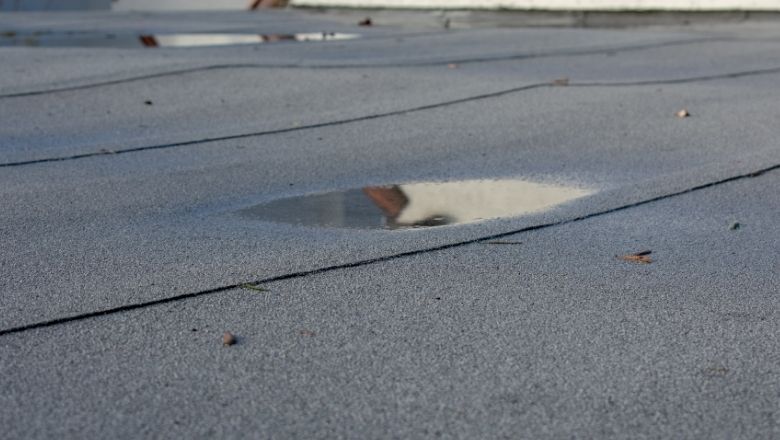
You may glance up at your building’s flat roof and think, “Looks fine.” No leaks, no bubbles, no puddles big enough to worry about. But the roofing contractors who work every week across Tacoma, University Place, Gig Harbor, and Fox Island know the truth: those shallow, mirror-like pools after a rainstorm are not harmless. They’re silent troublemakers, soaking into seams, softening insulation, and quietly cutting years off your roof’s life.
At Custom Design Roofing LLC, we’ve seen what happens when ponding water is left alone on flat roofs— warped decking, spongy spots, and leaks that show up months later inside your business. Commercial roofs, especially the flat or low-slope ones we install and repair across Western Washington, are built tough — but they’re not designed to be swimming pools.
Let’s pull back the curtain on what causes ponding water on flat roofs, why it costs business owners more than they think, and how professional contractors prevent it from coming back.
What’s Really Happening When Water Pools on Your Roof
A flat roof isn’t truly flat — it’s supposed to have a subtle slope so water drains off into scuppers or internal drains. When you start seeing puddles that hang around for more than 48 hours after it rains, that’s roof ponding.
Here’s what usually causes it:
- Poor drainage design from the start — not enough slope, too few drains.
- Blocked scuppers or downspouts clogged by leaves, debris, or moss.
- The settling of the building structure that shifts water toward the center.
- Insulation compression beneath the membrane.
- Failed seams or low spots after years of temperature changes.
In Tacoma or Gig Harbor’s climate, where heavy rainfall and freeze-thaw cycles are a yearly routine, even a half-inch puddle can become a problem fast.
The True Cost of Ponding on Commercial Roofs
It’s easy to underestimate how much damage standing water can cause — until the bills start rolling in. According to the leading roofing companies near University Place, ponding water doesn’t just shorten a roof’s life; it chips away at your building’s efficiency, safety, and reliability every single day.
1. It Eats Away at Your Roof’s Lifespan
Water that sits too long starts breaking down roofing membranes, adhesives, and protective coatings. The longer the ponding remains, the faster those materials age. What could’ve been a 20-year TPO or PVC roof might fail in half the time.
Visible warning signs:
- Discoloration or bubbling on the membrane surface.
- Areas that feel soft or “spongy” when stepped on.
- Tiny cracks at the edges of the pond.
2. It Raises Your Energy Bills
According to the top commercial roofing contractors near University Place, when insulation below the ponding area becomes saturated, it loses its insulating ability. That means your HVAC system has to run harder to keep the building cool in summer and warm in winter.
In large facilities, we’ve seen energy costs rise 10–15% after insulation became waterlogged — and nobody noticed until an inspection.
3. It Creates Liability Risks You Can’t See
Ponding isn’t just bad for your roof; it’s bad for your safety record. Stagnant water can breed mold, rot decking, and weaken structural supports. Roof access becomes risky for anyone doing maintenance or HVAC service.
For property owners and managers, that’s an avoidable liability just waiting to make the wrong kind of headline.
4. It Interrupts Your Business When You Least Expect It
The moment water finds a path inside, you’re not just facing roof repairs — you’re facing operational downtime. Leaks above production floors, inventory storage, or office ceilings don’t wait for a convenient time.
Most of the emergency calls our roofing contractors handle around Port Orchard and University Place start the same way: “We noticed a small stain last month. Now it’s dripping.”
How the Pros Fix Ponding Before It Costs You More
When it comes to flat roof ponding repair, there’s no single magic fix. Every roof is different — slope, material, drainage design, and age all play a role. But here’s how experienced commercial roofing contractors like Custom Design Roofing handle it, step by step.
Step 1: Drainage Comes First
Water has to go somewhere — and too often, it doesn’t. We start by checking every drain, downspout, and scupper to ensure they’re clear and functional.
| Drainage Problem | Why It Happens | Contractor Solution |
| Clogged drains or scuppers | Debris, moss, or roofing granules | Clean and flush, install protective screens |
| Insufficient slope | Poor design or structural settling | Install new drains, or move existing ones |
| Standing water at roof edges | Inadequate drainage points | Add scuppers or overflow drains |
That’s why flat roof drainage upgrades are one of the first things we recommend during maintenance planning.
Step 2: Add Tapered Insulation to Recreate Slope
Tapered insulation systems are one of the most effective flat roof ponding solutions. By creating subtle slopes beneath the membrane, water naturally flows toward drains rather than pooling in one spot.
- Works well for TPO, PVC, and torchdown roofing systems.
- Cost-effective compared to replacing the entire deck.
- Adds energy efficiency while fixing ponding issues.
Custom Design Roofing frequently installs these systems across commercial projects in Tacoma and Gig Harbor — because it’s a permanent solution, not just a patch.
Step 3: Routine Maintenance for Prevention
Even the best roof needs upkeep. The difference between a 10-year roof and a 25-year roof often comes down to maintenance.
A commercial roof maintenance plan might include:
- Semi-annual inspections (typically spring and fall).
- Cleaning drains and gutters.
- Checking seams, edges, and flashings.
- Monitoring for new low spots or soft decking.
It’s proactive, not reactive — and it keeps warranties valid. Custom Design Roofing offers ongoing service programs that help businesses avoid surprise expenses and maintain compliance.
Step 4: Choose Materials That Handle Ponding Better
Even the most reliable roofing companies near Gig Harbor believe that not all materials are created equal. Membranes like TPO and PVC handle ponding water far better than old built-up asphalt systems. These materials resist bacterial growth, reflect UV rays, and maintain seam strength longer.
If your flat roof was installed more than 15 years ago, your contractor may recommend a new flat roof ponding repair using modern single-ply membranes. These are lighter, cleaner, and engineered for durability in Washington’s wet climate.
How to Know If Your Roof Needs Professional Attention
You don’t need to climb up there yourself — just know what to look for:
- Persistent puddles are visible after 2–3 days of dry weather.
- Peeling paint or damp spots on interior ceilings.
- Uneven rooflines when viewed from the street.
- Algae or moss buildup in the same areas.
If you notice any of those, call local roofing contractors near Gig Harbor or Tacoma who understand the region’s heavy rainfall patterns and how to design roofs that actually shed water properly.
Why Work with Local Experts in Washington State
Hiring local matters — especially for commercial roofs. Western Washington’s weather can be unpredictable, and understanding how moisture, temperature, and wind interact with roofing systems isn’t something you can learn from a manual.
Here’s why local roofing companies near Gig Harbor and Tacoma can make a difference:
- They understand local building codes and drainage requirements.
- They respond faster when heavy storms hit.
- They use materials tested for Washington’s climate.
- They know which systems (like TPO or PVC) hold up best here.
Custom Design Roofing is locally owned and operated in Gig Harbor, proudly serving commercial clients across Tacoma, University Place, Fox Island, and Port Orchard. Our company’s work includes flat and low-slope roofs, metal roofing, TPO/PVC installations, roof repairs, and emergency roofing.
How Commercial Roof Ponding Impacts Your Building
| Problem | Immediate Effect | Long-Term Cost |
| Standing water | Accelerated membrane aging | Shortened roof lifespan |
| Wet insulation | Reduced energy efficiency | Higher utility bills |
| Structural soft spots | Sagging roof or collapse risk | Costly rebuild |
| Leaks from seams | Interior damage, mold | Business downtime |
| Blocked drains | Overflow, roof damage | Frequent repairs |
Final Takeaway: Don’t Let Your Roof Become a Reservoir
When it comes to ponding, “flat” doesn’t mean “harmless.” Every drop that lingers on your roof is working against it — softening adhesives, straining the structure, and slowly driving up your costs.
That’s why building owners across Tacoma, University Place, Gig Harbor, Fox Island, Port Orchard, and the surrounding locations trust our roofing contractors at Custom Design Roofing LLC to keep their roofs dry, strong, and energy-efficient. From flat roof drainage upgrades to full-scale flat roof installations, our team delivers long-term protection designed for Washington’s weather.
If you’ve noticed ponding water on your commercial roof, it’s time to act before the next storm does the talking.
Call us at (253) 858-0909 to schedule an inspection and get your flat roof back in top shape — before ponding water becomes a problem.