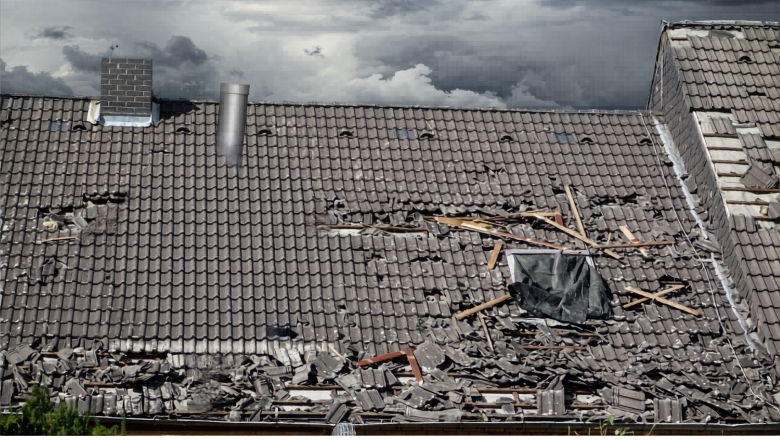
Here is something most homeowners in Gig Harbor, Tacoma, Fox Island, Port Orchard, and University Place do not realize: the storm that passed through last Tuesday may already have caused roof storm damage, and they will not find out until water is dripping from the ceiling three months from now.
That is not an exaggeration. Storm-related roofing damage, especially wind damage, roof issues, and hail impacts, is famously slow to reveal itself, and by the time it does, what could have been a straightforward repair has often become a much larger project. Knowing how to recognize the early roof damage signs makes all the difference.
What Actually Causes Wind and Hail Damage to Roofs?
Wind and hail are two very different forces, and they attack roofing systems in very different ways.
- Wind creates upward pressure across the roof surface. It works against the adhesive bonds holding shingles in place and can pry flashing away from vulnerable areas like chimneys, valleys, and roof edges. The Pacific Northwest coastline experiences consistent seasonal wind events that repeatedly place this kind of stress on homes.
- Hail, on the other hand, delivers a direct downward impact. It bruises roofing surfaces, strips away protective granules, and can fracture shingle material without displacing it at all. A roof can look completely intact after a hailstorm and still have significant hidden damage.
According to NOAA, severe storms cause over $20 billion in property damage across the United States each year, with roofing systems accounting for a large share of that total.
Common Signs of Wind Damage Homeowners Should Never Ignore
Exterior signs worth checking after any windstorm:
- Missing shingles, wind damage along the roof edges, and ridge lines
- Shingles that appear curled, buckled, or lifted at the corners
- Flashing that looks bent, loose, or separated around chimneys and vents
- Gutters pulling away from the roofline
- Granule deposits are collecting near downspouts
Interior signs that tend to go unnoticed:
- A musty smell is developing in attic spaces
- New ceiling stains, even small ones
- Drafts near the upper floors of the home
Worth knowing: Wind damage is often concentrated along roof perimeters, ridge caps, and valley areas. These are not easy to assess from the driveway, which is why many homeowners assume the roof is fine when it is not.
What Hail Damage Usually Looks Like on a Roof
Hail impact roof damage is the harder of the two to catch early because the shingles typically stay in place. What changes is the surface layer underneath them.
Common hail damage indicators:
- Circular bruise marks or dark spots on shingle surfaces
- Visible roof granule loss, which exposes the underlying mat to the sun and water
- Cracked shingles following larger hailstones
- Dents or dings on metal gutters, downspouts, and roof vents
The metal components of a roof, including gutters and flashings, often show hail impact first. If those surfaces are dimpled after a storm, the shingles above them likely absorbed some impact as well.
Wind Damage vs Hail Damage: Key Differences at a Glance
| Factor | Wind Damage | Hail Damage |
| How it affects shingles | Lifts, curls, or removes them | Bruises or fractures the surface |
| Damage pattern | Follows wind direction | Scattered, often random |
| Most vulnerable areas | Roof edges, ridges, flashing | Broad roof face, gutters, vents |
| Speed of water intrusion | Faster, gaps open quickly | Slower, seeps over weeks or months |
| Visible from the ground | Sometimes | Rarely |
Why Storm Damage Is Not Always Visible From the Ground
Roof damage warning signs have a frustrating habit of hiding in the exact areas that are hardest to see without getting on the roof. Valleys, ridge caps, underlayment seams, and ventilation transitions are among the most vulnerable spots during a storm, and they are essentially invisible from street level.
The Insurance Institute for Business and Home Safety confirms that even minor compromises in a roof’s exterior layer can allow moisture to accumulate and worsen the property’s condition.
In communities like Tacoma and Gig Harbor, where roofs stay damp for extended periods after rain, that moisture has more time to work its way into wood framing, insulation, and drywall. The damage rarely stops on its own.
How Storm Damage Can Lead to Roof Leaks
A roof leak after storm activity rarely shows up right away. The sequence is gradual: protective layers get compromised, water finds a path through, moisture collects in the underlayment, and weeks later, a stain appears on the ceiling.
Signs that moisture may already be present:
- Water staining or discoloration on ceilings
- Condensation or dampness in the attic
- Mold or mildew odors in upper rooms
- Paint peeling near the roofline
The EPA notes that mold growth can begin within 24 to 48 hours of moisture intrusion under certain conditions, which makes prompt roof damage assessment genuinely time-sensitive.
What to Do After a Storm Hits Your Roof
A practical post-storm checklist:
- Walk around the property at ground level and look for displaced shingles, bent gutters, or debris contact
- Check the attic for any daylight, moisture, or new staining
- Look at ceilings throughout the home, including closets and hallway corners
- Photograph everything that looks out of the ordinary for insurance documentation
- Schedule a professional storm roof inspection before the next rain event
Can Wind or Hail Damage Be Repaired, or Does It Require Replacement?
| Situation | Likely Path Forward |
| Isolated shingle damage on a newer roof | Targeted repairs |
| Limited hail impact, materials otherwise sound | Surface repairs or partial work |
| Moisture has reached the underlayment | More extensive restoration is needed |
| Aging roof with repeated storm history | Full roof repair vs. replacement evaluation |
The right call depends on roof age, material condition, the extent of moisture penetration, and the structural integrity of the deck below. Custom Design Roofing LLC serves homeowners across Tacoma, Gig Harbor, Fox Island, Port Orchard, and University Place with licensed roof repair services, full replacements, metal roofing, gutter work, and a range of residential and commercial roofing solutions built for Western Washington conditions.
When Should You Call a Roofing Professional?
Contact a storm damage roofing specialist if any of the following apply:
- Your area experienced notable wind or hail within the past month
- Have you noticed any of the interior or exterior warning signs described above
- Shingles appear lifted, cracked, or missing in any area of the roof
- Your roof has not had a professional roof inspection in several years
- You are planning to file a claim and need proper documentation
FEMA recommends professional evaluation following severe weather events because homeowner self-assessments frequently miss damage that only a trained eye can identify from a close vantage point.
Your Roof Has Been Through a Lot. It Deserves a Closer Look.
Western Washington storms are not always dramatic, but they are consistent, and roofs across Gig Harbor, Port Orchard, Fox Island, Tacoma, and University Place absorb that pressure year after year. The homeowners who tend to face the smallest repair bills are not the ones with the newest roofs. They are the ones who pay attention early.
If a recent storm has left you uncertain about the condition of your roof, Custom Design Roofing LLC is worth a call. Our team brings licensed expertise in emergency roof repair, inspections, residential and commercial roofing, and full replacements to every project across the region. A free estimate costs nothing, and the peace of mind it buys is worth far more than the alternative of waiting.
Contact Custom Design Roofing LLC at (253) 858-0909 to schedule your assessment today.